The ultimate outcome measurement for the Newborn Care Course project would of course be a reduction in neonatal mortality in the areas where we work. There are so many confounding factors in any clean data that is actually collected that it is almost impossible to prove that one intervention like this has any statistically significant effect on neonatal mortality. But our funders always ask for outcome measures. This year in Cameroon we changed the feedback form a bit, bringing it more into line with the template suggested by the UK’s Royal College of Paediatrics and Child Health. This has allowed us to measure pre- and post- course confidence in the main areas identified by WHO as contributing to newborn deaths. Here are the results from last month’s course:


The challenge now, of course, is to keep that confidence up going forwards.


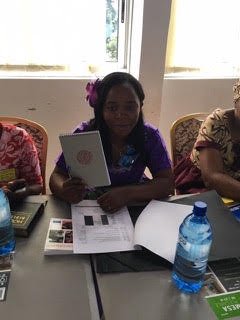

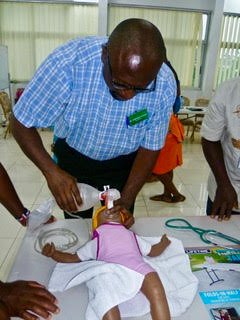

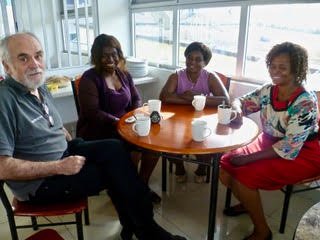
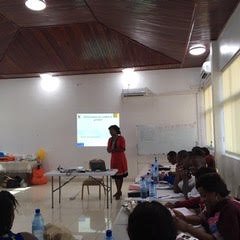


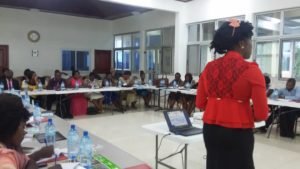

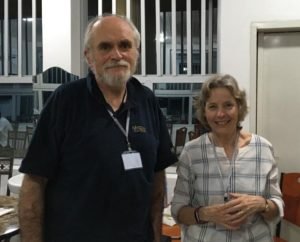 This is Alison and Jarlath, busy in Cameroon mentoring 12 local instructors through their instructor candidate newborn care courses. We use the UK model for training instructors. They first have to do a two day very intense instructor training course known as the generic instructor course (GIC). Then they have to teach on 2 newborn care courses but are supervised during that time by a more senior instructor. At the end of this they are fully fledged newborn care course instructors. It is quite demanding training, the same as the UK advanced life support instructors go through, but is one of the best short instructor training courses available. The NICHE instructors are on site this week to complete the training of the 12 local instructors who did their generic instructor course this time last year. As a team, we are very heartened by this step. It is step 8 in our sustainability plan and means that we can remove ourselves from Cameroon for a few years. Step 9 and 10 will take place when the trained local instructors have done enough courses to start training as instructor trainers themselves. We hope to be invited back for that stage in two or three years time.